
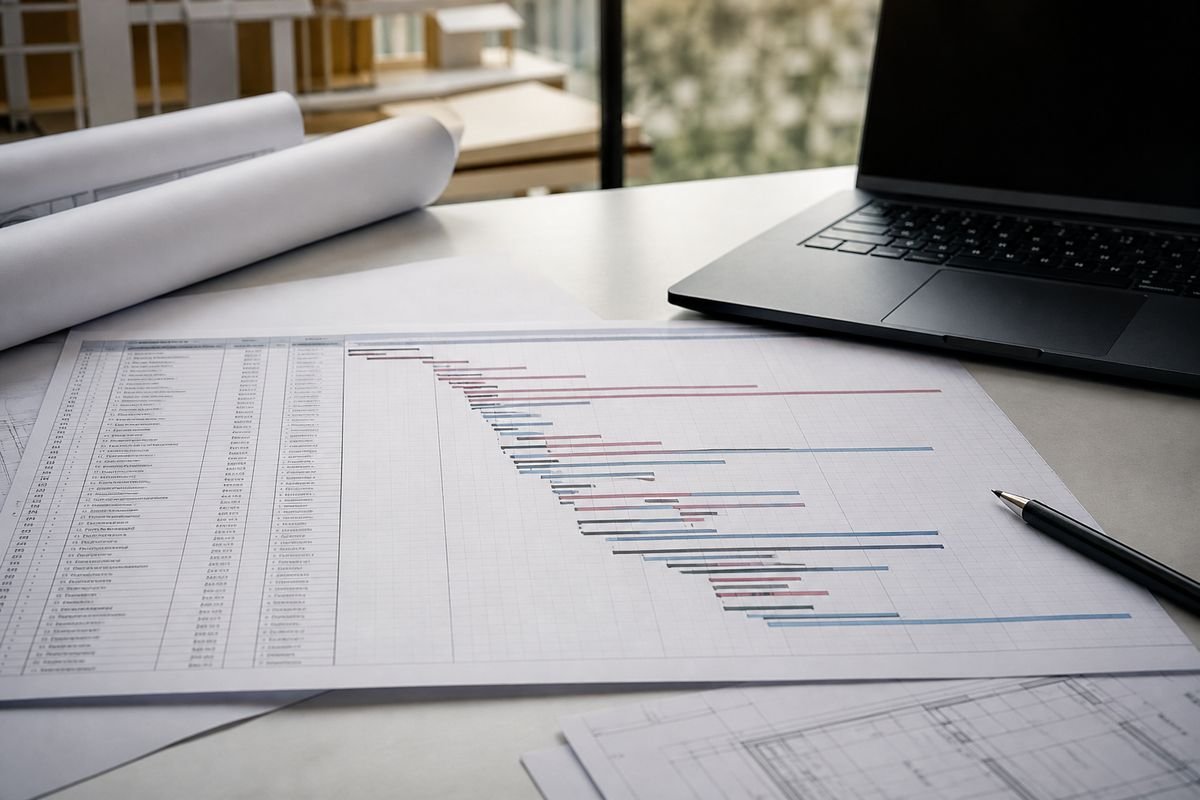
The purpose of a planning report is to tell the story of a project: what has been done, where things stand, and what can be expected down the line. To that end, there are several types of reports, each one zeroing in on a particular aspect of performance.
Progress Report
This is for recording the work put in over a reporting period. One will find details on completed tasks, activities that have been started and wrapped up, and any key events or incidents. It also covers actual progress and any delays. Such data is essential for keeping the project schedule current.
Status Report
Here, the focus is on the project's present position in relation to the approved plan or Performance Measurement Baseline (PMB). A status report will lay out the current milestones, schedule position, and any risks or issues at hand, while comparing planned with actual progress.
Forecast Report
Based on the schedule and how the project is proceeding, a forecast report indicates when it is likely to finish. It presents the expected project status and provides completion dates, upcoming milestones, and any remaining work or schedule changes. These figures should be re-examined if the logic of the schedule or the progress shifts.
Variance Report
To see how actual performance measures up to the plan, a variance report is used. Typical points of comparison are schedule variance, baseline versus forecast dates, and planned versus actual quantities.
Trend Report
By looking at how performance has evolved from one period to the next, a trend report can show whether things are on the up or down. It tracks milestones and forecast movement, as well as float and overall schedule performance.
Earned Value Report
An EVM report is a way of pitting planned and earned work against actual cost. The standard metrics are Planned Value (PV), Earned Value (EV), and Actual Cost (AC), along with the Schedule and Cost Performance Indices (SPI and CPI) and their respective variances.
Overview
| Report | Purpose |
|---|---|
| Progress Report | To record what was accomplished in the period |
| Status Report | For the current standing of the project |
| Forecast Report | To put forward expected outcomes and dates |
| Variance Report | To highlight the gap between plan and reality |
| Trend Report | To chart changes in performance |
| Earned Value Report | EVM-based measurement of cost and schedule |
Wrap Up
Choose the report that fits the information at hand. For instance, use a progress report to document the work, a status report for the present position, or an EVM report to get a read on schedule and cost performance. Forecast and variance reports will show expected dates and any divergence from the plan, while a trend report is best for tracking movement.
