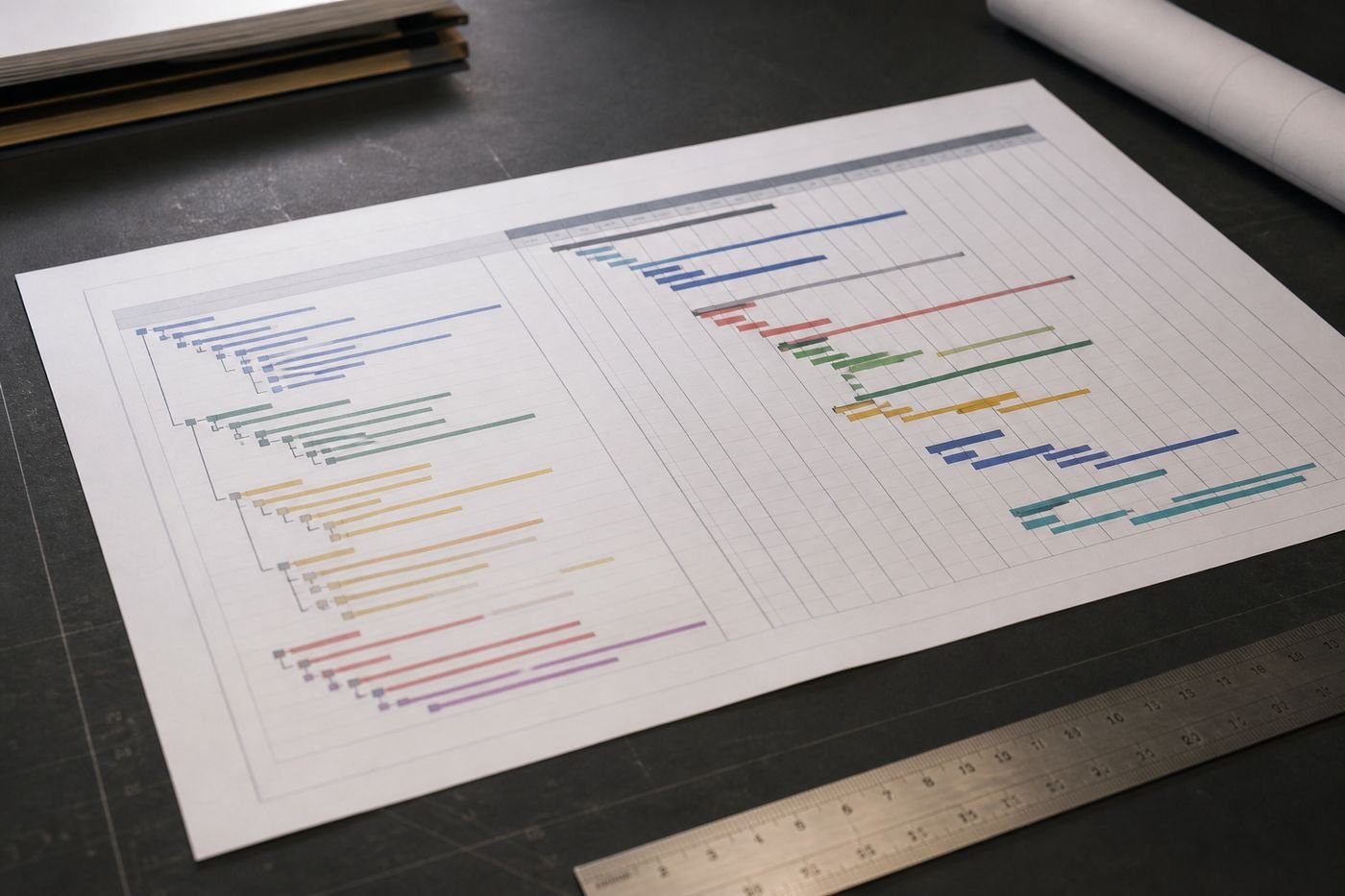
01
Define & plan
Set out scope, dates and the activities, logic and sequencing the programme needs to represent.

ABOUT DCD-GS
Planning, scheduling and project controls expertise for complex construction and infrastructure programmes — from the early stages of planning through to delivery.
THE CONTROL LOOP
A programme is not finished when the baseline is approved. DCD-GS follows the project through connected stages so the plan stays aligned with the work.
01
Set out scope, dates and the activities, logic and sequencing the programme needs to represent.
02
Agree the programme against which progress, change and performance will be measured.
03
Update with actual progress, then compare plan and actuals to see what the forecast is saying.
04
Use the findings to address issues, manage change and keep the team focused on what needs attention.
OUR AIM
Our mission is to put actionable information in the hands of those in charge of the project — whether that is a baseline programme, a live schedule review or ongoing project controls support.

Who we are
Our core aim does not change regardless of the task at hand. We test schedule logic, progress and critical-path movement so the programme reflects how the work is actually being delivered.
6
Control loop stages
8
Sectors supported
9
Specialist services
HOW WE WORK
We test schedule logic, dependencies, progress, performance and critical-path movement so the programme reflects the work.
If the data reveals a problem, we work with project teams to determine the cause, clarify what is at stake, and establish a way forward.
A project controls function should do more than produce another monthly report. The information needs to be accurate, understood and useful.
WHY DCD-GS
Control is more than reporting. These are the things we hold onto on every engagement.
| Focus | What it means | Where it shows up |
|---|---|---|
| Clarity | Make programme and performance information easier to understand | Reviews, packs and conversations about what has changed |
| Precision | Pay close attention to logic, progress, dependencies and the forecast | Baselines, updates and critical-path checks |
| Early visibility | See float, critical path and forecast dates move before they become issues | Period updates and near-critical reviews |
| Actionable insight | Explain what the information means for the next decision | Recovery options, change and where attention is needed |
QUESTIONS
A short set of questions teams usually ask before they bring us onto a programme.
We provide planning, scheduling and project controls for complex construction and infrastructure programmes — from the early stages of planning through to delivery.
Both. A programme is not finished when the baseline is approved. We can develop it, maintain it, test it against actual progress and help the team decide what to do next.
We work across Primavera P6 and MS Project, and we help teams understand how logic, calendars and settings affect the forecast — not just which package they prefer.
Yes. We can provide dedicated resources or sit with an established team. The aim is the same: keep programme information current and useful.
With a conversation about the programme, the information you already have, and where visibility is weak. We then agree whether the need is a baseline, a review, ongoing controls or a combination.
No. We put usable information in the hands of the people already in charge of delivery. PMaaS and controls support fill a gap; they do not take over the organisation.